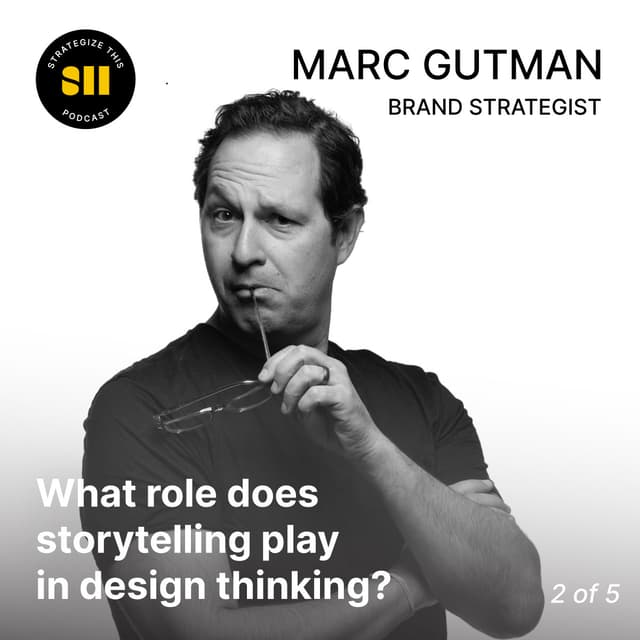
What role does storytelling play in Design Thinking? | Marc Gutman (1 of 5)
Marc Gutman of Wild Story explores how empathy drives design thinking — and when storytelling becomes a trap. He shares a journal-entry exercise that forces brands to remove themselves from the narrative and make their customer the hero.
Show Notes
In This Episode
Marc Gutman explains the deep connection between storytelling and design thinking, arguing that both are rooted in empathetic thinking — putting yourself in the shoes of your audience and hero. He warns that storytelling can also become a trap when we rush to categorize behavior through archetypes instead of observing without bias. Marc shares a powerful client exercise: writing a journal entry from a customer's perspective without mentioning the brand, which reveals how little space your product actually occupies in someone's day.
Key Takeaways
- Design thinking is fundamentally about empathetic thinking — understanding both your hero (the customer) and your audience before designing solutions
- Storytelling can be a trap: resist the urge to impose familiar archetypes on observed behavior instead of truly understanding what you see
- The journal-entry exercise — writing a day-in-the-life of your customer without mentioning your product — forces brands to confront how small their role really is in the customer's world
- Make your client's customer the hero of their own story, not your brand — when you remove yourself from the narrative, that is when design solutions become truly successful
About Marc Gutman
Marc Gutman is the Chief Strategist at Wild Story, a brand strategy and design studio located near Boulder, Colorado, focused primarily on arts and outdoor recreation clients. Marc and Wild Story are on a mission to help the world play, one brand at a time.
Connect
- Hosted by Adam Matossian and Alicia Jones
- Listen on Spotify | Apple Podcasts | Amazon Music